“Aim for his feet, he’s wearing trainers” – The Skill of Bowling on Sundays – by Greg Pearce
The Nuts and Bolts of bowling
The nuts and bolts of bowling on a Sunday is to try to bowl straight and full. I learned very early on that ‘if the batsman misses, you hit,’ should be the mantra for Anson bowlers. It is down to this that I got the number of wickets that I did.
This was however shown not to be the case when I played League Cricket. I found that bowling full and straight was not enough against quality batsmen. If you are too full they will drive you and if you are too straight, they will put you through the leg side.
The very tight margin for a bowler against top players is a 4th stump line and trying to hit the wicketkeeper’s gloves above said 4th stump. At medium pace, as I was, this becomes all the more important and difficult as you don’t have the raw pace to get you out of trouble.
On a Sunday though, I found it different. Even against the best players at our standard, I found that straight and full normally troubled the batsmen, or at least kept the them quiet. For my money, apart from our own Lee Gilbert, the best batsman at our standard was Graham Hancock of Coopersale CC. I took it as a great compliment when Graham would block out an over of mine and then walk down the wicket and exclaim, ‘I’m not getting a lot of shit here Greg!’
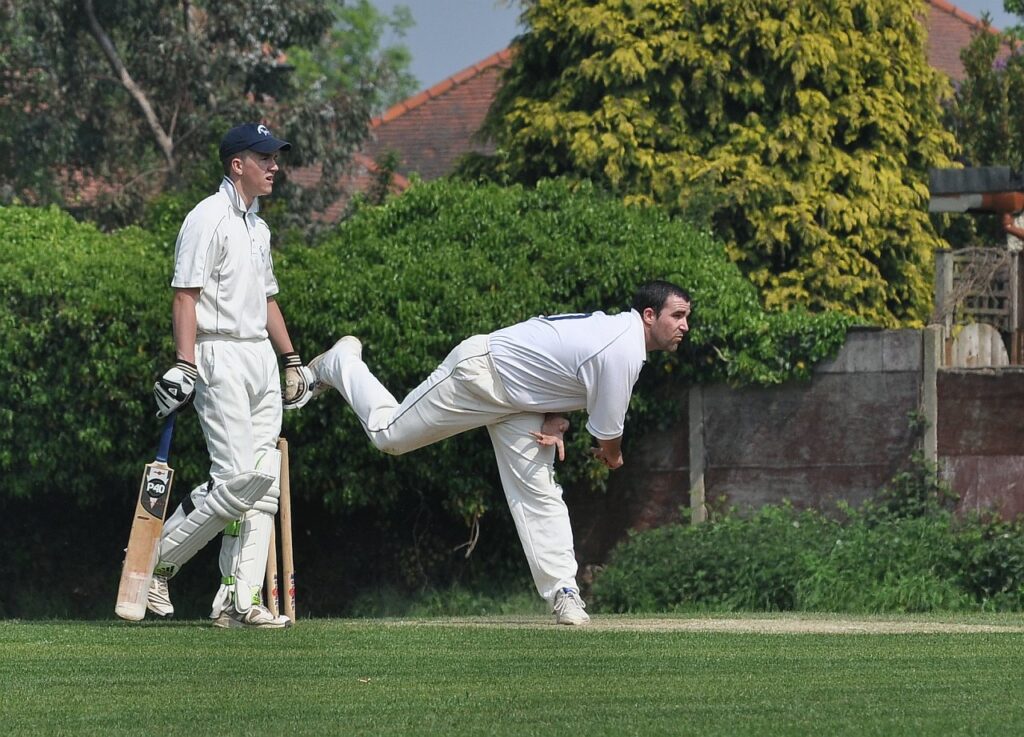
Keeping it tight
I must admit that I loved bowling dot balls, as I saw this as taking overs out of the game. Keeping Graham quiet meant that Coopersale CC were going nowhere and Anson were controlling the game.
John Monk always said: ‘the job of the opening bowler is to keep it tight. The wickets will be taken by the first and second change, as the game opens up.’ This was shown in the match that the Anson’s opening bowlers kept if tight for about 10 overs against Great and Little Warley. Once the game opened up and a friend of Simon Rowe’s came on, he bowled slowly and took 7 or 8 wickets for not many, as batsman after batsman licked their lips and hit him in the air to our fielders.
My bowling style was very different from my opening bowling partner in crime, Paul Evans. Paul could swing the ball out naturally and at a good pace. He tried to bowl properly and induce the edge from the batsmen. As we all know, Paul’s brain works on a different level to the rest of us and he would plot the demise of batsman as If playing in a Test Match. Many times Paul asked for another slip after beating the edge and I, as captain, would tell him: “It’s not worth it mate. No one is going to catch it anyway!” Paul bowled lots of balls that were never going to get wickets because they were too good for the batsman.
Bowling Noughties Style
In my time, the game was very different from today. There was a grace period given by 90% of opening batsmen at the start of the innings. Bowling straight and full was enough to keep the majority of balls as dots in the scorebook. This gave time for the fielding team to settle into the game and for the captain to work out his field placings to each batsman that came in. With the rise of 20/20, it is even more of a batsman’s game than ever. The bowler has to be on the spot from the first ball to avoid batsmen looking to smash them from the off.
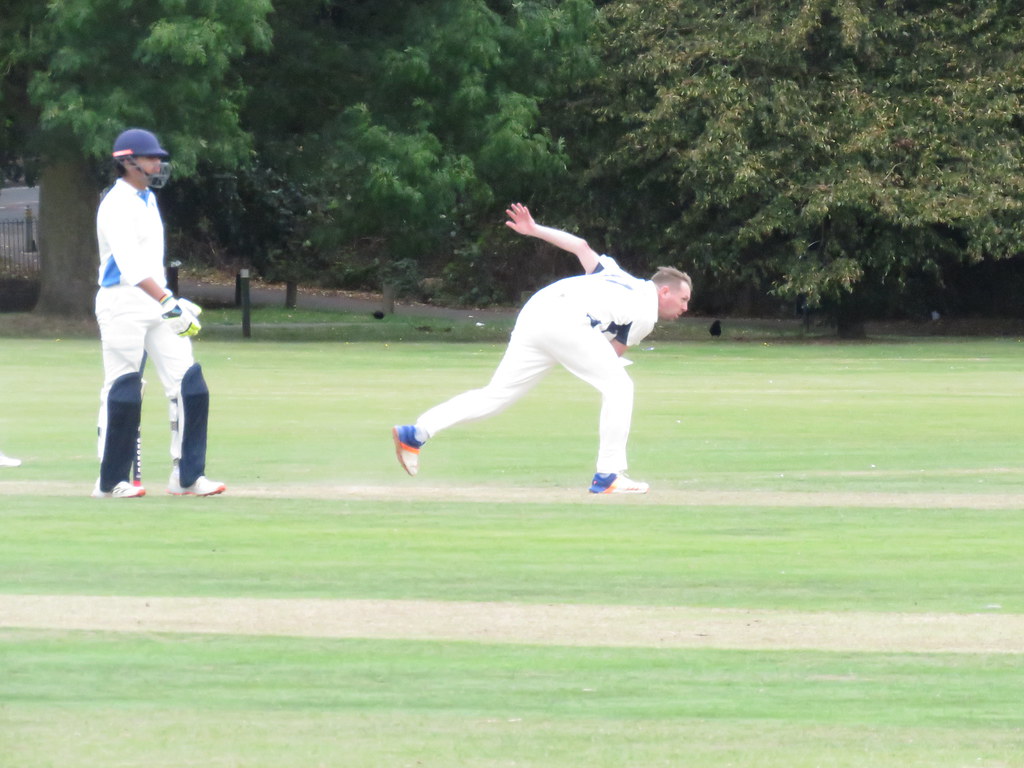
As a captain, I always liked the opening bowlers to get through their overs cheaply and for the middle overs to be bowled by players with short run ups, that would get through their overs quickly. At different times, some great partnerships did this. Ian Attridge and John Monk were the engine room of our time in the field, in my early days. Taggs, Redway, Nobby Styles and George Collins took over their mantle for a good few years and I ended by pairing the bowling of CJ and Hugh.
I felt that I could always set a field for each of the above to make the middle overs go quickly and without much damage. The hope was, that the batting team would not cotton on to the amount of overs that had rattled by and fail to realise that they had to put their foot on the pedal until it was too late.
“Watch out for the one that turns, bat”
Dear Alf was a bowler that unbelievably got a lot of wickets for us. He was a leg ‘finger’ spinner who used to shine the ball. He would float the ball up, at a very slow pace and catch many batsmen out. Their eyes would light up and they would imagine hitting him into the next field. They would come down the wicket and often miss the ball and complete their swing and get back in, before the ball got to the wicketkeeper!
Alf used to have to buy wickets and he was effective against Sunday batsmen. But, I think he would have been too expensive to use week and week out against quality players. If a top batsman would have faced him, they would surely have taken 2 a ball by pushing him into a gap and wait for the next rank 4/6 ball to come along.
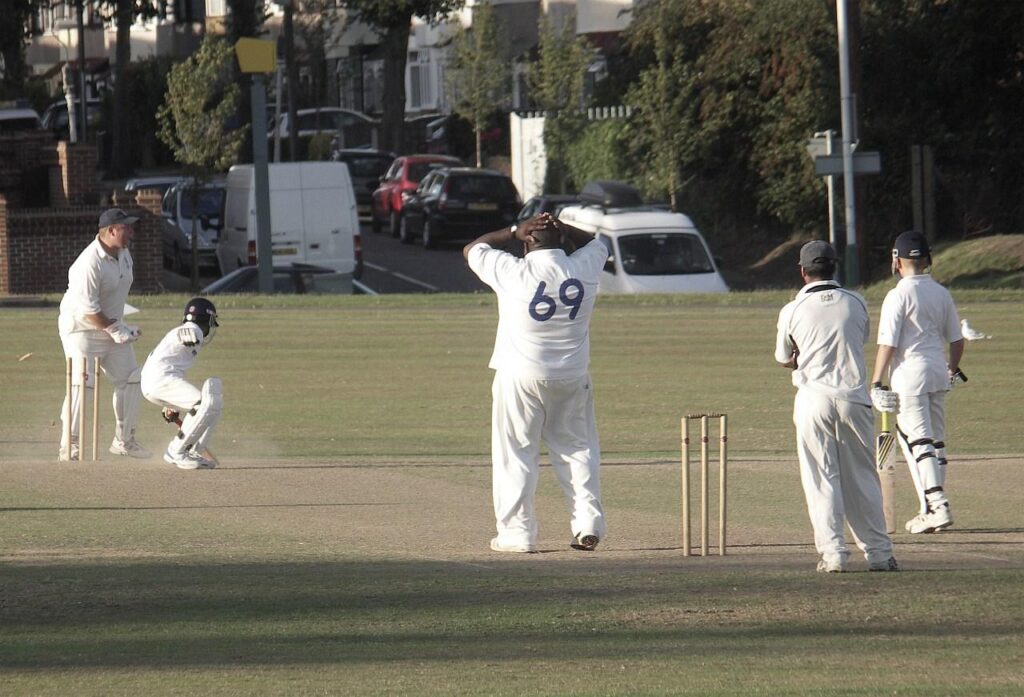
Setting the field
With regards field placings, the section of the game that I enjoyed captaining and bowling in the most was the final overs in a 40 over match. Setting a field of Long On and Long Off, Deep Cover, Cow Corner, Long Leg, Third Man and Short Cover and Short Midwicket (Plus Hughy in his very straight, short Mid Off position) always felt like it would starve a Sunday batsman of boundaries. They had to pick a gap perfectly to get 4 or 6. This is also where pace off of the ball would come in and the harder the batsman would try to hit it, the more chance we had of them missing or getting caught.
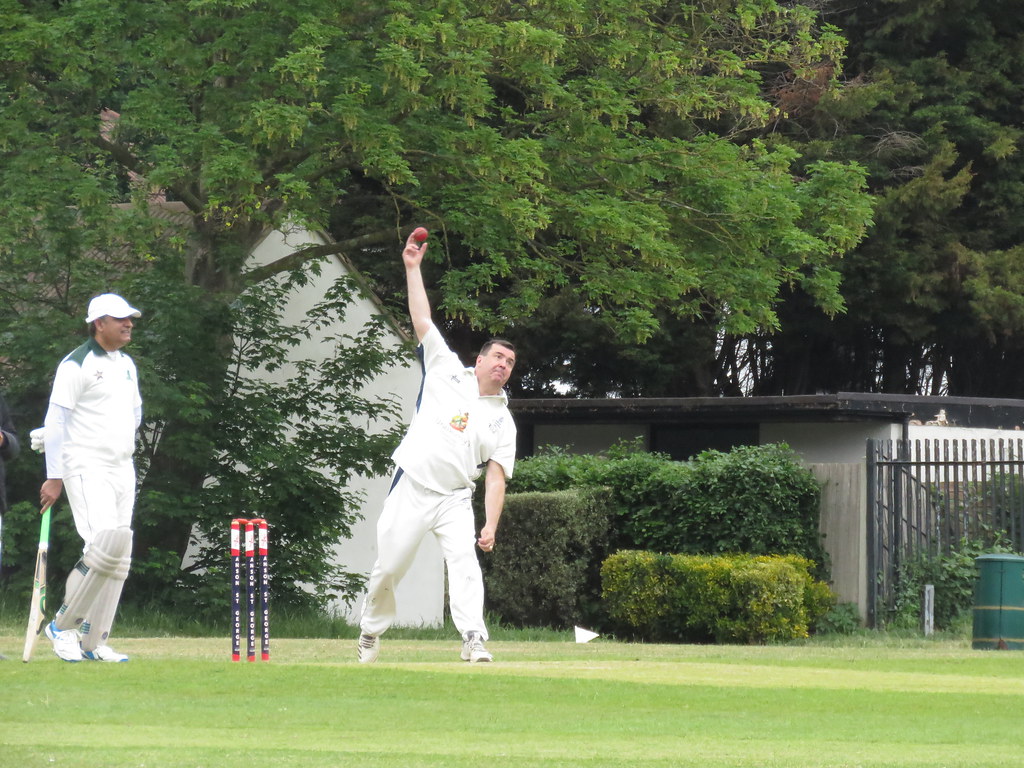
Standing at the end of your run up can be very daunting if playing with people you don’t like or don’t trust. Bowling for Anson was a joy for me as I always felt relaxed. The banter going around the field was second to none and it would only be myself that got overly annoyed when I bowled a bad ball. Brian Clough said that ‘You can only do something to the best of your ability, if you are relaxed.’ This is why so many people have taken a lot of wickets for our great club. We take all other considerations out of the game. In theory, bowling is simple. Just run up and knock the stumps over!




Another great piece of writing by our England Teacher. Always a good read. Thanks mate
Modestly not adding any pictures of himself!
A well written piece, minus some stories of the banter that existed.
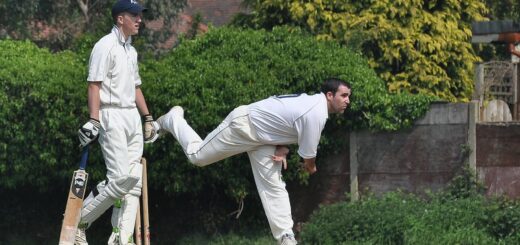
I couldn’t find any pictures of Greg bowling